
Commemorative plates serve as ceremonial and collectible vessels for corporate anniversaries, institutional milestones, and organizational recognition events. Unlike mass-produced generic gifts, customized commemorative plates integrate specific themes, brand identities, and craftsmanship details into a singular, irreplaceable keepsake.

Commemorative plates displayed on dark velvet with soft studio lighting
Core Application Scenarios
Demand for commemorative plates concentrates in three primary scenarios. Corporate anniversary celebrations represent the most common direction, spanning from tenth anniversaries to centennial milestones, where the plate surface carries key moments in a company's development history. Societies and associations similarly rely on commemorative plates as honor carriers. The Lions International Centennial Commemorative Plate serves as a representative case — the plate face integrates the organizational emblem, anniversary numerals, and founding year, while the base is engraved with the organization's mission statement, forming a complete narrative of honor. The third scenario covers business gifting and diplomatic gifts, where requirements for material quality and packaging specifications are higher, typically combining metal plates with wooden or crystal bases.
Material and Craftsmanship Selection Logic
Mainstream materials for metal commemorative plates include zinc alloy, copper, stainless steel, and aluminum alloy, each presenting distinct trade-offs in weight, malleability, and cost. Zinc alloy offers high casting precision and suits complex relief patterns, making it the most commonly used base material. Copper provides superior oxidation resistance, ideal for commemorative applications requiring long-term preservation. Surface treatment processes directly determine the final texture, with common options including gold plating, silver plating, antique finishing, and enamel color filling, often combined for layered effects. The Lions Centennial Plate, for instance, features purple enamel filling with gold-plated borders, the numeral "100" rendered in rhinestone inlay, and an outer ring of granular-textured metal, producing a visually stratified composition.

Close-up of commemorative plate showing enamel fill, gold plating, and rhinestone detail
Craftsmanship selection must align with budget and quantity parameters. Mold development constitutes the fixed upfront cost of plate customization; more intricate patterns and deeper relief layers increase mold expenses. As order volume scales, the per-unit share of mold cost decreases significantly.
Key Stages of the Customization Process
A complete commemorative plate customization workflow comprises four phases. The first phase is design consultation, where the client provides thematic concepts, brand assets, and dimensional preferences, and the design team delivers renderings for approval. The second phase is prototype confirmation, where physical samples validate material, color, and craftsmanship outcomes — this stage establishes the quality benchmark for mass production. The third phase is bulk manufacturing, proceeding through casting, polishing, plating, and assembly once the mold is finalized. The fourth phase is quality inspection and delivery, involving piece-by-piece examination for surface defects and craftsmanship consistency before packaging and shipment.
Shenzhen Rusi Crafts Co., Ltd. provides end-to-end service in metal commemorative plate customization, covering design, prototyping, production, and delivery. The facility holds ISO9001 quality management system certification and supports SMETA, REACH, and other compliance standards, meeting procurement audit requirements for international clients. Design services carry no additional fees; clients submitting reference images or textual descriptions receive design drafts at no cost. Production operates with no minimum order quantity threshold, accommodating small-batch commemorative needs.
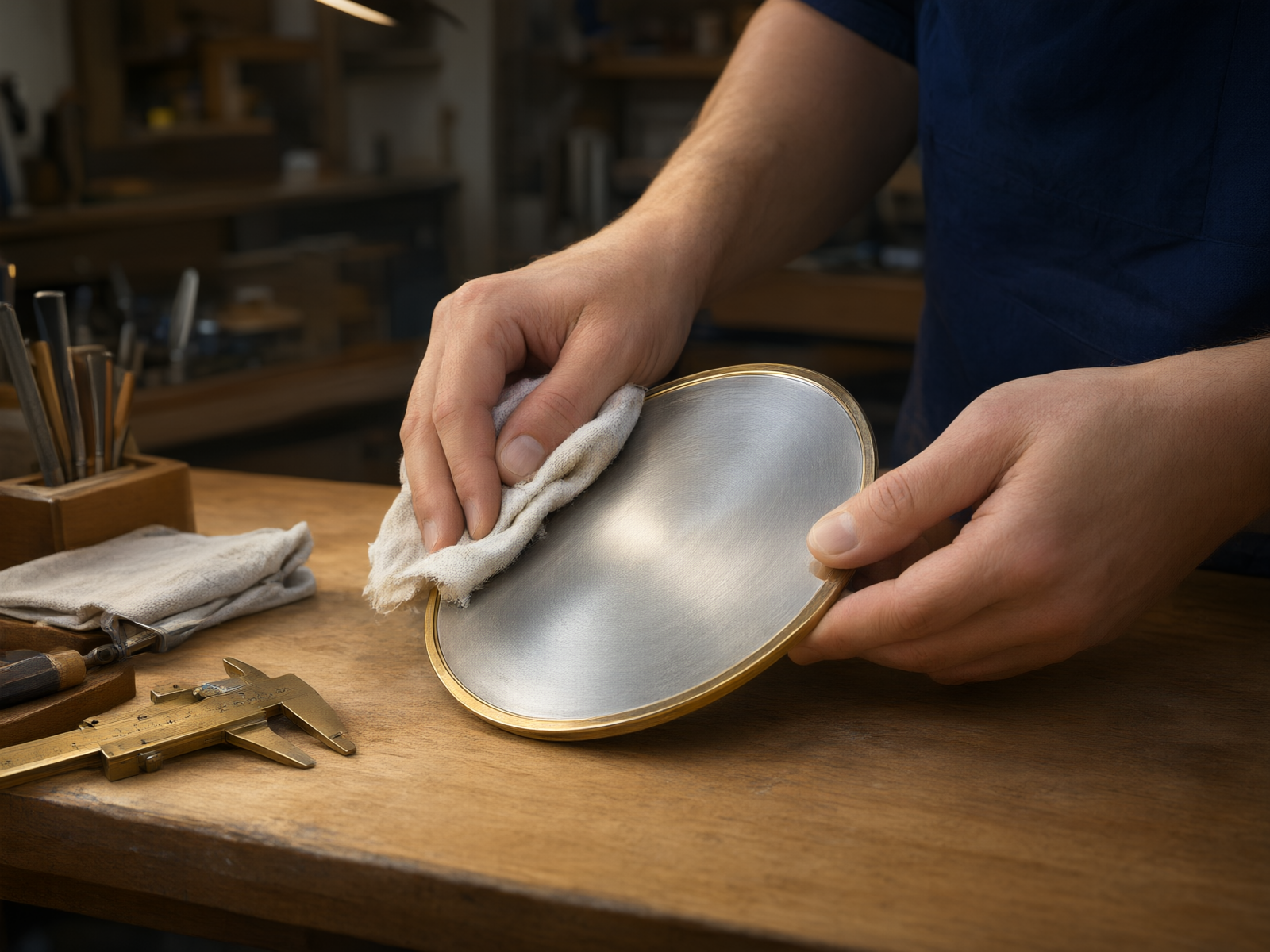
Craftsman's hands polishing a metal commemorative plate on a workbench
Evaluating Commemorative Plate Suppliers
When selecting a commemorative plate supplier, assessment should focus on three dimensions. First, the quality of case photography — high-resolution product photos authentically reflect craftsmanship capability, while over-retouched sample images may indicate discrepancies in actual output. Second, process transparency — whether each stage from design draft approval to prototype acceptance has clearly defined deliverables and timelines. Third, compliance credentials — orders involving international delivery require suppliers to hold relevant quality certifications and environmental compliance documentation.
The value of a commemorative plate lies not in the raw material cost but in the meaning it carries and the sincerity conveyed through its craftsmanship. A well-designed, precisely executed metal commemorative plate commands attention at the ceremony and continues to function as a brand memory anchor in the years that follow.
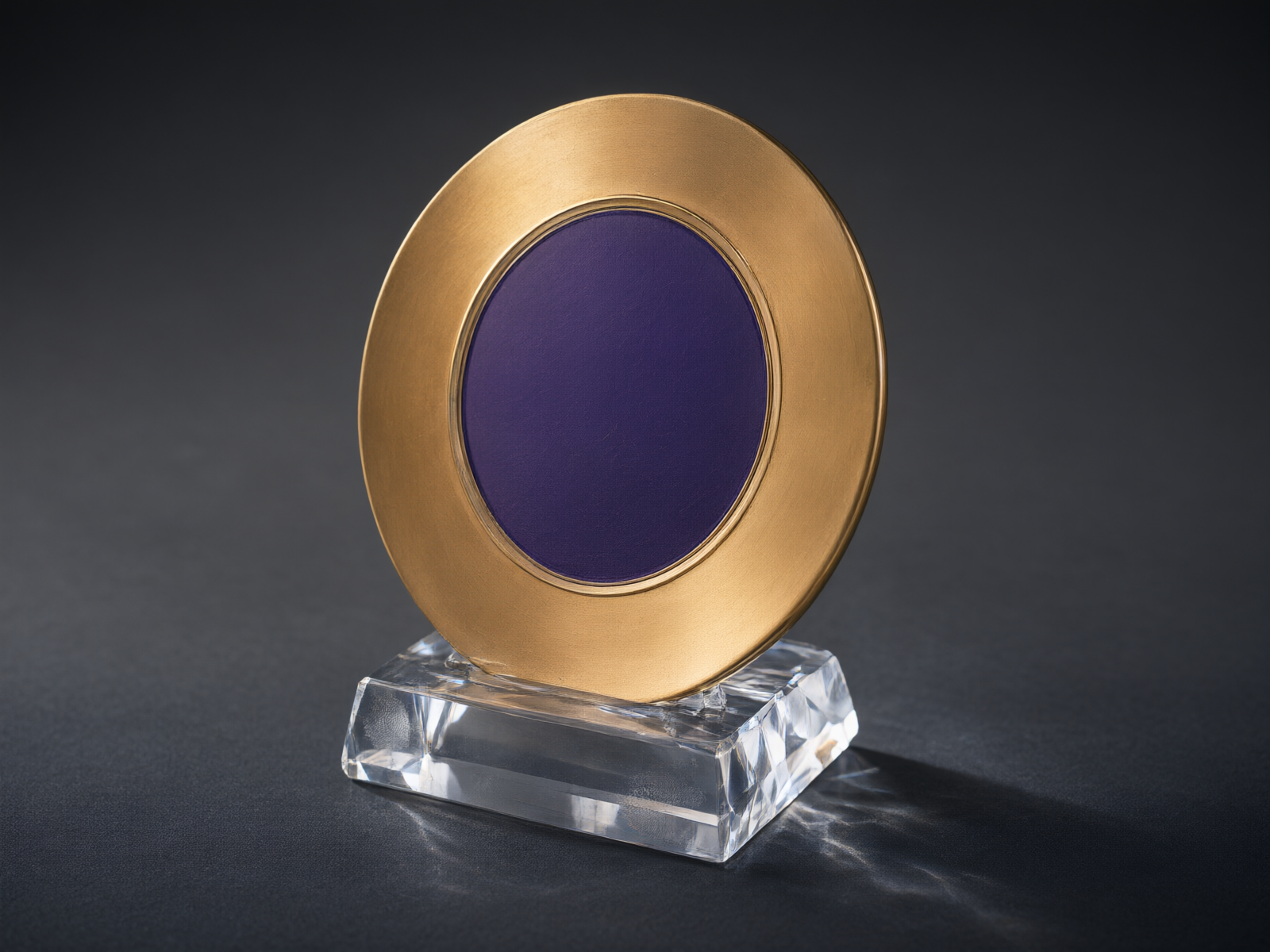
Finished metal commemorative plate on crystal base with elegant studio lighting